Almost everyone who books a cosmetic consultation arrives having already decided what they want. Usually they've seen a result online and asked for that treatment by name.
Often it's the wrong treatment for their actual problem — sometimes far more invasive and expensive than what they needed, occasionally not enough to deliver the result they're picturing.
So before you decide between whitening and veneers, understand what each one actually does. They are not competing options. They solve completely different problems.
The question that decides it: what's actually wrong?
Ask yourself which of these best describes your teeth:
A) My teeth are well-shaped and reasonably straight — they're just yellow or dull.
→ You want whitening. Veneers would be overkill and would involve removing healthy enamel for no reason.
B) My teeth are chipped, gapped, uneven in size, slightly crooked, or discoloured in a way that whitening won't lift.
→ You want veneers, or possibly orthodontics first.
C) Some of both.
→ Common. The usual sequence is whitening first, then veneers or bonding on the specific teeth that still need shape correction — matched to your newly brighter natural shade.
That's genuinely the whole framework. Whitening changes colour. Veneers change shape, size, alignment, and colour.
Understanding why some stains won't whiten
This is the part that determines whether whitening will work for you, and it's rarely explained.
Extrinsic stains sit on the outside of the enamel. Coffee, black tea, shisha, tobacco, red sauces, some medications. These respond very well to whitening — the peroxide breaks the pigment molecules apart and they lift out.
Intrinsic stains are inside the tooth structure itself. Causes include tetracycline exposure during childhood tooth development, dental fluorosis, trauma that darkened a single tooth, and the natural yellowing of dentine as enamel thins with age. Whitening has limited effect on these because the pigment isn't on the surface — it's in the body of the tooth.
A dentist can distinguish them in one examination. This is the single most useful thing a consultation gives you, because it tells you whether whitening will achieve your goal before you spend money finding out.
Professional whitening: what it is and isn't
How it works: A high-concentration hydrogen peroxide or carbamide peroxide gel is applied to the teeth. It penetrates enamel and dentine and oxidises the pigment molecules, breaking them into smaller, colourless compounds.
The two professional options:
- In-clinic (chairside) whitening — gums are protected with a barrier, high-concentration gel is applied in cycles, often activated by light. Roughly 60–90 minutes, dramatic same-day results. Best when you have an event coming up.
- Custom take-home trays — impressions are taken, trays are made to fit your teeth exactly, and you wear lower-concentration gel for a set period daily over one to two weeks. Slower, but many dentists consider the result more stable, and you keep the trays for future top-ups.
Many clinics combine both: an in-clinic session for the jump, then trays to maintain it.
Why over-the-counter strips disappoint people: Consumer products carry far lower peroxide concentrations and use a one-size strip that doesn't seal against your teeth — so gel contacts some surfaces and not others, producing patchy results. They also can't protect your gums the way a professionally applied barrier does. They aren't useless; they're just slow and limited.
What whitening cannot do:
- Change the colour of crowns, veneers, composite fillings, or bridges. These do not whiten at all. If you have a white filling on a front tooth and you whiten, that filling will suddenly look darker than the tooth around it and will need replacing. Plan for this.
- Fix shape, gaps, chips, or alignment
- Fully correct severe intrinsic staining
- Last forever — expect roughly 1–3 years depending on your diet and smoking, with top-ups extending it
Sensitivity: Temporary sensitivity is the most common side effect and typically resolves within a few days. Professional supervision matters here — desensitising agents can be applied, and concentration adjusted for your teeth.
Veneers: what you're actually committing to
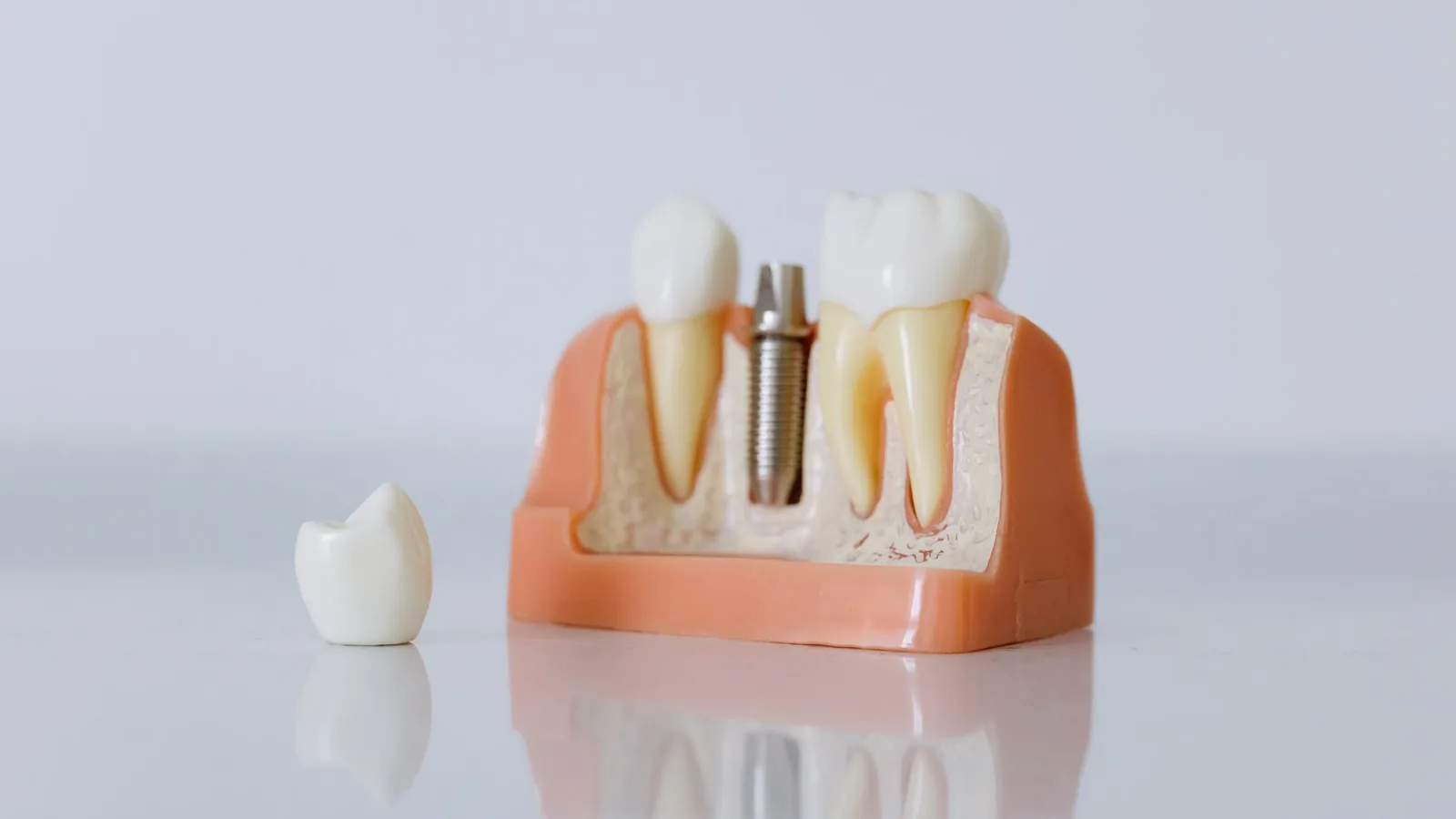
What they are: Ultra-thin custom shells — porcelain or composite — bonded to the front surface of your teeth. They redesign the visible face of the tooth entirely: colour, shape, length, width, and apparent alignment.
Porcelain veneers: Made in a dental laboratory, usually over two to three visits. Highly stain-resistant, excellent light behaviour that mimics natural enamel, and typically last 10–15 years or more with good care.
Composite veneers: Sculpted directly onto the tooth in a single visit. Cheaper, faster, and more easily repaired — but they stain over time and generally last 4–8 years.
The thing you must understand before agreeing: Most porcelain veneers require removing a thin layer of enamel from the front of the tooth so the veneer sits flush rather than looking bulky. Enamel does not grow back. Once you have veneers, you will need veneers or crowns on those teeth for the rest of your life. They will eventually need replacing.
This isn't an argument against veneers — it's a genuinely transformative treatment and millions of people are delighted with theirs. But it is a permanent commitment, and any dentist who doesn't say so clearly before you agree is not giving you informed consent.
Ask specifically whether minimal-prep or no-prep veneers are possible for your case. They aren't suitable for everyone, particularly if teeth need to be brought forward or significantly reshaped, but they preserve more tooth structure when they are.
Cost in Egypt (2026 ranges)
Egypt is one of the more affordable places in the world for quality cosmetic dentistry, which is why dental tourism here has grown. Broad market ranges as of 2026:
| Treatment | Typical range in Egypt |
|---|---|
| Composite veneers | ~1,500–3,600 EGP per tooth |
| Porcelain veneers | ~3,000–8,000 EGP per tooth |
| Full "Hollywood smile" package | ~50,000–140,000 EGP depending on materials, unit count, and lab |
| Removable / snap-on smile | ~6,000–15,000 EGP per arch |
These are market ranges, not our quote. Price varies with the dental laboratory used, the material, the number of units, and the clinician's experience — and the lab quality genuinely matters, because that's where the aesthetics are actually made.
For your specific case, ask for an itemised written treatment plan before you commit. Any clinic reluctant to provide one is a clinic to walk away from.
The order matters
If you're considering both, the sequence is not optional:
- Treat any active problems first. Decay, gum disease, and infections must be resolved. Cosmetic work on an unhealthy foundation fails.
- Orthodontics, if alignment is significantly off. Straightening teeth and then veneering is far more conservative than grinding crooked teeth down to fake straightness with porcelain.
- Whitening next. Whiten your natural teeth to your target shade first.
- Veneers, crowns, or bonding last — matched to your new brighter shade.
Doing this out of order is the most common and most expensive cosmetic dentistry mistake. Veneers placed before whitening cannot be lightened afterwards.
Get a real answer for your teeth
The right treatment depends on your enamel, your stain type, your bite, your gum health, and what you actually want your smile to look like. That's a consultation, not a search result.
Book a cosmetic consultation at Reedy Dental Clinic in Suez. We'll assess your teeth, tell you honestly whether whitening alone will get you where you want to go, and build a plan around your goals and your budget — with the costs written down before anything starts.
---
---